
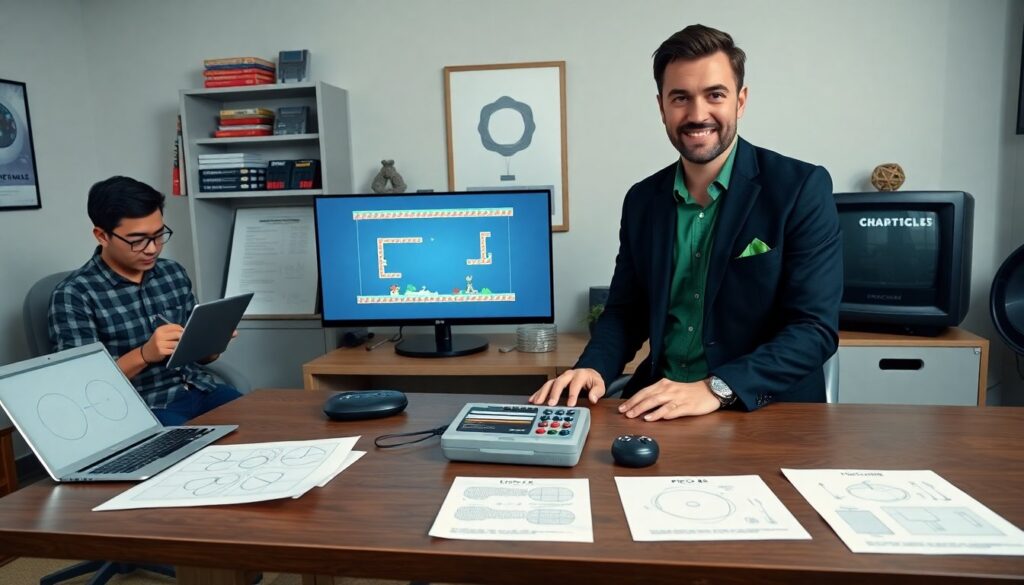
Retro gaming quantum gaming cucumber gamingvoyage appears as a combined search phrase that signals new trends. This guide explains how retro play, quantum ideas, and the Cucumber GamingVoyage community interact in 2026. It gives clear definitions, design notes, and practical steps. Readers will get concrete ideas they can test, stream, or build into a project.
Key Takeaways
- Retro gaming remains popular due to its nostalgic appeal, simple controls, and community-driven activities like speedruns and mods.
- Quantum gaming integrates probabilistic mechanics and branching timelines to create novel, unpredictable gameplay experiences.
- Designers combine retro pixel art with quantum-inspired randomness to add depth while maintaining accessibility in games.
- The Cucumber GamingVoyage community fosters creativity through green-themed retro-quantum aesthetics, casual experimentation, and collaborative game jams.
- Starting a Cucumber GamingVoyage project involves a small scope, clear quantum mechanics, and engaging audiences via friendly streaming and social sharing.
- Players and creators benefit from prototyping with modular tools and embracing probability cues to adapt effectively to quantum gaming mechanics.
The Enduring Allure Of Retro Gaming: Why Old-School Play Still Wins Hearts
Retro gaming quantum gaming cucumber gamingvoyage shows how old titles keep influence. Players feel simple controls and clear goals. Developers reuse pixel art, chiptune music, and tight mechanics. Fans value nostalgia and low barriers to entry. Speedruns, mods, and hardware restorations keep communities active. Streamers replay classics and explain strategies. Museums and indie festivals present cartridges and cabinets. Schools use retro games to teach coding and design. Retro design helps new creators focus on gameplay with small teams. Communities form around shared memories and easy entry points.
What Quantum Gaming Really Means In 2026
Retro gaming quantum gaming cucumber gamingvoyage now includes quantum ideas applied to play and simulation. Researchers use quantum algorithms to model game systems and randomness. Studios explore quantum-inspired randomness for procedural generation. Players test game states with probabilistic tools. Quantum hardware still limits mainstream deployment, but cloud services let teams run experiments. The term often refers to new mechanics that use probability, superposition ideas, or entanglement metaphors. These mechanics change how players plan, predict, and adapt. The label draws interest from tech press and curious players.
How Quantum Concepts Influence Game Design And Player Experience
Designers borrow quantum terms to craft novel systems. They build mechanics where actions create branching timelines. Players choose moves that reveal alternate outcomes. Developers use probabilistic layers to shape difficulty and surprise. Matchmakers test quantum-like randomness to reduce grinding. Visuals use blur and overlap to show possible states. Tutorials teach players to think in probabilities instead of certainties. Playtests reveal that some players enjoy planning for many outcomes, while others prefer clear feedback. Designers balance clarity and mystery to keep games fair and fun.
Inside Cucumber GamingVoyage: A New Niche Community And Its Aesthetic
Cucumber GamingVoyage grew as a niche around quirky retro-quantum mashups. The group favors green tones, simple sprites, and playful scientific themes. Members share fan art, soundtracks, and short mods. The community values humor, accessibility, and casual experiments. They host weekly jams that mix 8-bit visuals with probability mechanics. Streamers adopt lighthearted personas and use simple overlays that show probabilistic outcomes. Cucumber GamingVoyage attracts hobbyists who want low-pressure creativity. The aesthetic works well on small screens and low-cost hardware. It promotes sharing and iterative work instead of polished products.
How To Start Your Own Cucumber GamingVoyage Project Or Stream
They pick a clear theme and a small scope. They create a palette with green accents and pixel fonts. They design a core loop that runs in minutes. They add one quantum-like mechanic, such as branching choices or chance windows. They test builds on free platforms and gather feedback on social channels. Streamers set a friendly tone and explain mechanics simply. Creators post short clips and asset packs to attract collaborators. They join jams and remix other projects. They reuse open tools and keep dependencies minimal.
Blending Retro Aesthetics With Quantum Mechanics: Design Ideas And Examples
Designers merge pixel visuals with probabilistic systems in several practical ways. They build roguelikes where each run spawns parallel timeline echoes. They craft puzzle games that show multiple possible outcomes as ghost images. They make card games where cards exist in superposed states until revealed. They tune sound for feedback so players learn probabilities by ear. Example: a platformer that duplicates the player across possible jumps and lets the player collapse the best path. Example: a rhythm game that alters beats by chance windows and asks players to adapt. These ideas keep mechanics simple while adding layered depth.
Practical Tips For Players, Creators, And Community Builders
Players test small mechanics before they commit time. They learn to read probability cues and to accept variance. Creators prototype with simple tools like PICO-8, Godot, or Unity. They keep art and code modular for quick swaps. Builders moderate communities with clear rules and active channels. They run themed jams and safe critique sessions. They document mechanics and post short tutorials. They use cloud services for experimental quantum backends when needed. They measure engagement and change features slowly based on real play data.